Solids Control Service in Nigeria
KES Separation provides professional solids control service in Nigeria, supporting oil and gas drilling operations with equipment commissioning, drilling fluid treatment, technical support, and drilling waste management solutions.
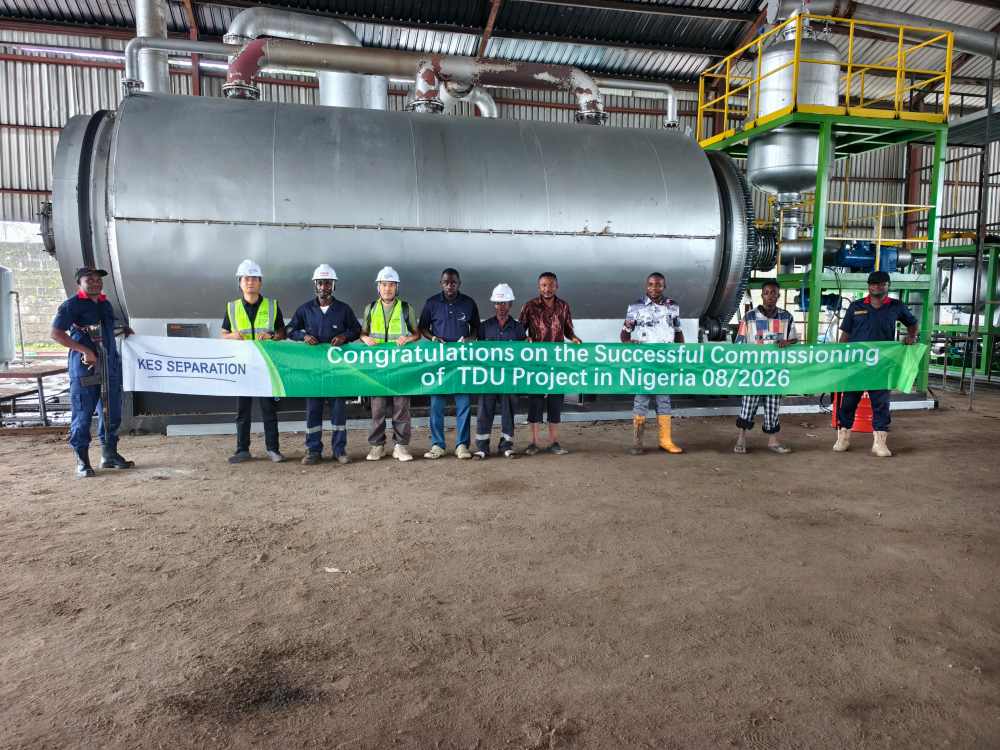
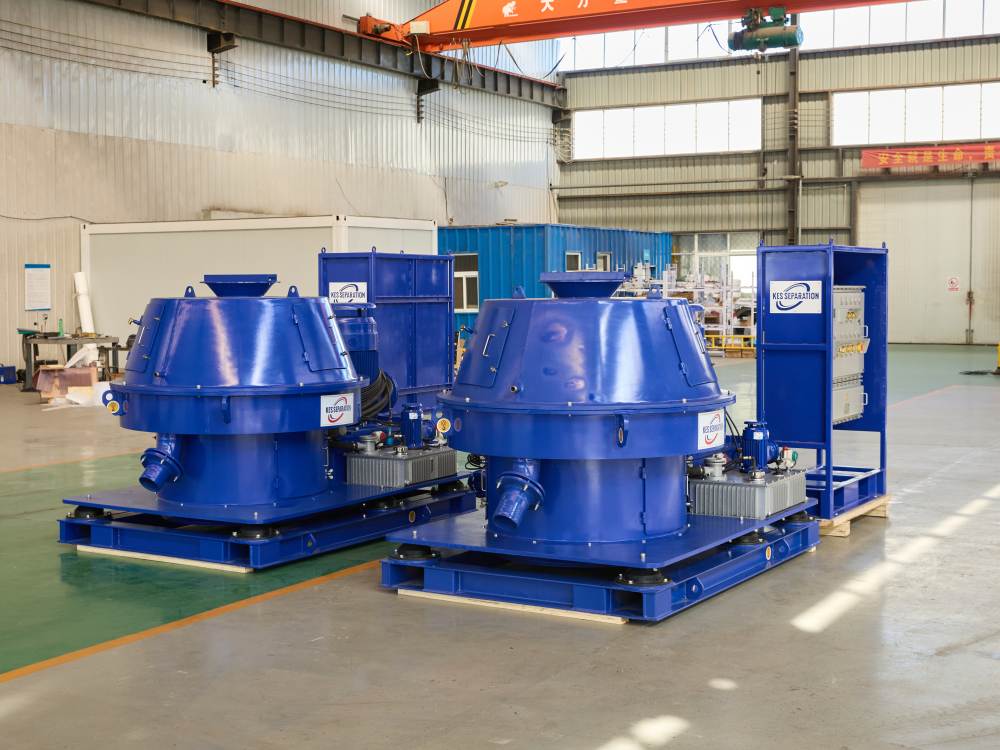
In August 2026, our technical team visited Port Harcourt, Nigeria, to provide on-site commissioning and training services for multiple batches of solids control equipment. The project included high-speed decanter centrifuges for drilling fluid treatment and a Thermal Desorption Unit (TDU) for oil-based drill cuttings treatment.
Our Nigeria service covers equipment installation, commissioning, testing, operator training, technical consultation, spare parts support, and after-sales service. These services help drilling contractors and oilfield companies improve equipment performance, maintain drilling fluid quality, reduce waste-treatment costs, and achieve more reliable field operations.
Why Solids Control Service Matters in Nigeria
Nigeria’s oil and gas industry operates under demanding drilling conditions where drilling fluid quality directly affects drilling efficiency, equipment life, and operating costs.
A professional Solids Control Service in Nigeria helps operators:
- Improve drilling fluid performance
- Reduce equipment wear
- Recover valuable drilling fluids
- Lower waste disposal costs
- Increase drilling efficiency
- Meet environmental compliance requirements
By combining advanced separation equipment with expert commissioning services, KES Separation helps drilling contractors maximize equipment reliability throughout the project lifecycle.
KES-Separation-provided-another-commissioning-service-in-August-2026-.jpg)
Mud Centrifuge Commissioning Process
Professional centrifuge commissioning is essential for achieving stable performance and minimizing equipment failures. Our engineers follow a systematic commissioning procedure before equipment enters production.
KES-Separation-provided-another-commissioning-service-in-August-2026.jpg)
The commissioning team then:
- Connects the mono pump with inlet and discharge hoses
- Places the suction hose inside the water tank.
- Connects the discharge hose to the centrifuge inlet.
- Verifies all pipe connections before startup.
Electrical Connection and Rotation Test
Qualified electricians connect the power supply before performing a Jog Start Test.
This inspection verifies:
- Main drive motor rotation
- Back drive motor rotation
-
Feed pump rotation direction
Important Safety Notes
- Always check the pump shaft, not the motor, when confirming rotation.
-
Never allow the mono pump to run dry, as dry running can quickly damage the stator.
Engineers monitor:
- Motor current
- Equipment vibration
- Bearing temperature
- Noise level
- Overall operating stability
KES-Separation-provided-another-commissioning-service-in-August-2026.jpg)
Meanwhile, KES Separation is performing installation services for a high‑quality Thermal Desorption Unit (TDU), purpose‑built for thermal treatment of OBM drill cuttings. The KES TDU consists of multiple modules: feed unit, heating unit, condensation unit and water tank. The installation‑commissioning procedure is detailed in the following steps:
Step 1 TDU Installation: Site‑Clearance
Remove all components of the existing TDU. The customer has operated this old unit for many years; due to its poor performance, the customer purchased a brand‑new set as a replacement. Therefore, the first step is to clear all old equipment out of the working area and clean the floor.
Subsequently, the customer is required to remove part of the roof so that a crane can gain access for lifting and placing the large TDU modules.
Step 2 TDU Installation: Module Alignment & Positioning
Mark reference lines for each individual module using lime powder. During layout marking, technicians shall ensure the layout is oriented due north and due south to guarantee reliable subsequent operation.
Once line‑marking work is finished, the crane may enter the site to position each TDU module.
Step 3 TDU Installation: Pipe Connection
Upon completion of module positioning, perform piping connections between individual modules. The piping network of the TDU functions like blood vessels in the human body. Proper pipe connections are critical to safe TDU operation.
Step 4 TDU Installation: Electrical Wiring and Test‑Run Preparation
After piping work is completed, qualified electrical engineers shall carry out cable connection and preliminary electrical tests. Operators shall verify the TDU’s peak‑power demand and determine the required generator capacity. For this project, an 80-kW generator is specified for TDU operation.
Step 5 TDU Installation: Initiate Trial Operation
Once the preceding four steps are fully completed, perform trial operation of the TDU using actual drill cuttings. We recommend running three trial batches during commissioning:
1st batch: Feed 10 tons of drill cuttings for thermal treatment. Apply low‑fire heating to warm the entire system gently. Monitor temperature rise, reactor and pipeline pressure fluctuations, and check for air‑leakage or water‑leakage points.
2nd batch: Process 15 tons of drill cuttings. Increase feed rate and processing capacity, and raise furnace firing intensity to standard operating level. Continue monitoring temperature rise, reactor and pipeline pressure fluctuations, as well as air and water leakage conditions.
3rd batch: Run at the designed maximum capacity with 20 tons of drill cuttings. Maintain elevated feed‑rate and bring the furnace up to normal operating fire level. Keep tracking temperature rise, reactor‑pipeline pressure fluctuations and potential air‑water leakages.
Upon successful completion of the three‑batch trial‑run, KES Separation will finish commissioning work and formally hand over the unit to the customer’s operation team.
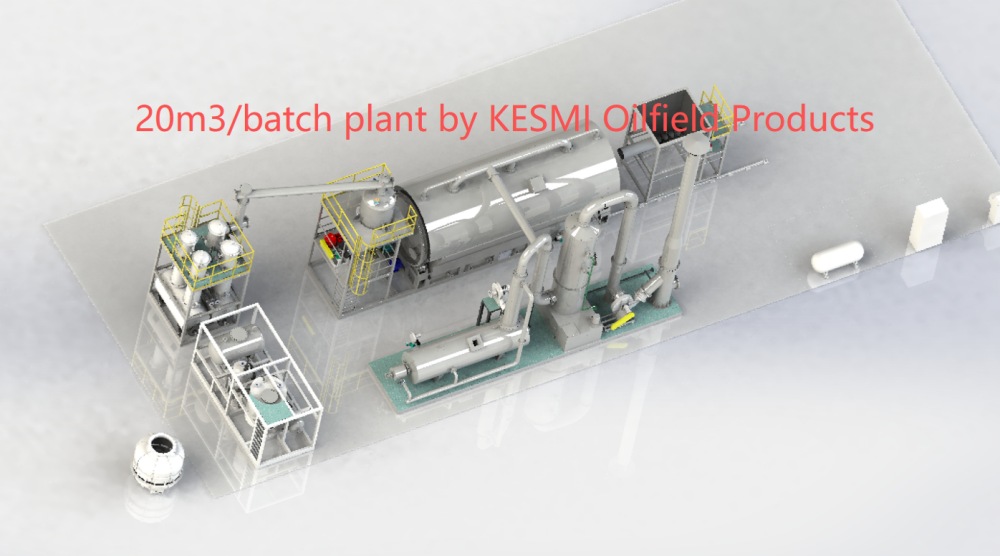
Thermal desorption unit is the last stage of drilling waste management. It mainly handles oil‑based drill cuttings from solids control decanter centrifuges and waste management vertical cuttings dryer. Through indirect heating, the system vaporizes hydrocarbons and moisture from waste solids without combustion. The vapor is condensed to recover reusable base‑oil, while treated solid residues feature low residual oil content and can meet local environmental‑protection standards for safe discharge or backfilling.
As a final barrier for hazardous drilling waste, the TDU minimizes waste volume and turns hazardous waste into recyclable resources. Its skid‑mounted modular design enables fast site installation and commissioning, which suits remote African oil‑field conditions well. Combined with upstream separation equipment, it forms a closed‑loop drilling‑waste‑management workflow, helping operators comply with local regulatory requirements and reduce overall waste‑disposal costs.
Need Solids Control Equipment or Service in Nigeria?
Contact KES Separation for customized solids control equipment, centrifuge commissioning, drilling waste management, TDU installation and technical support for oilfield operations.