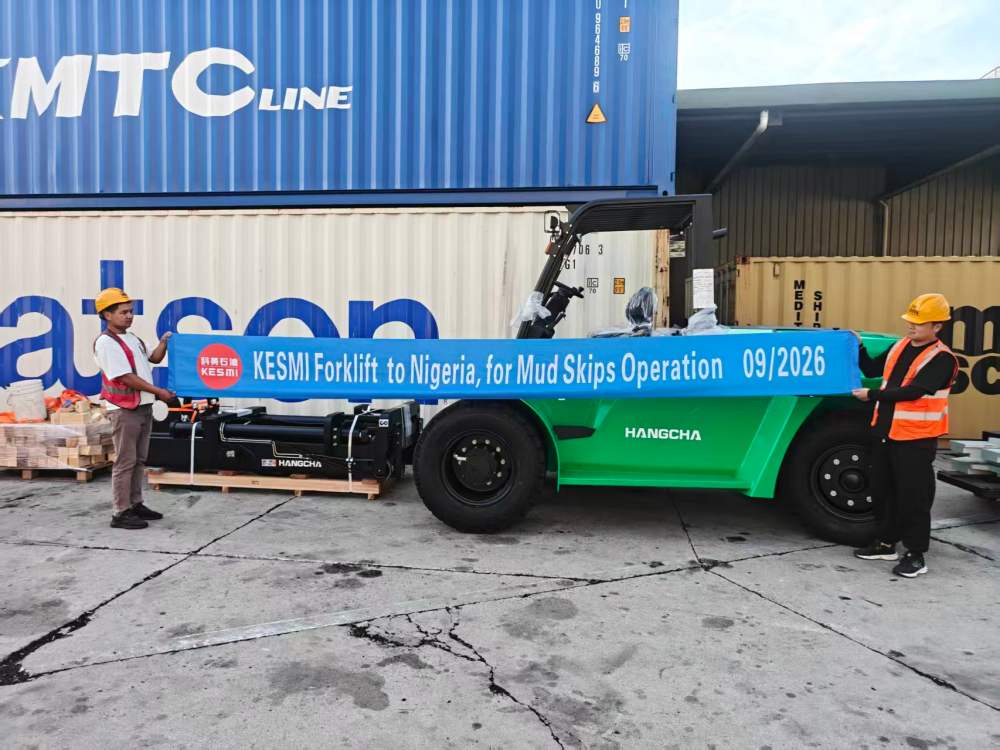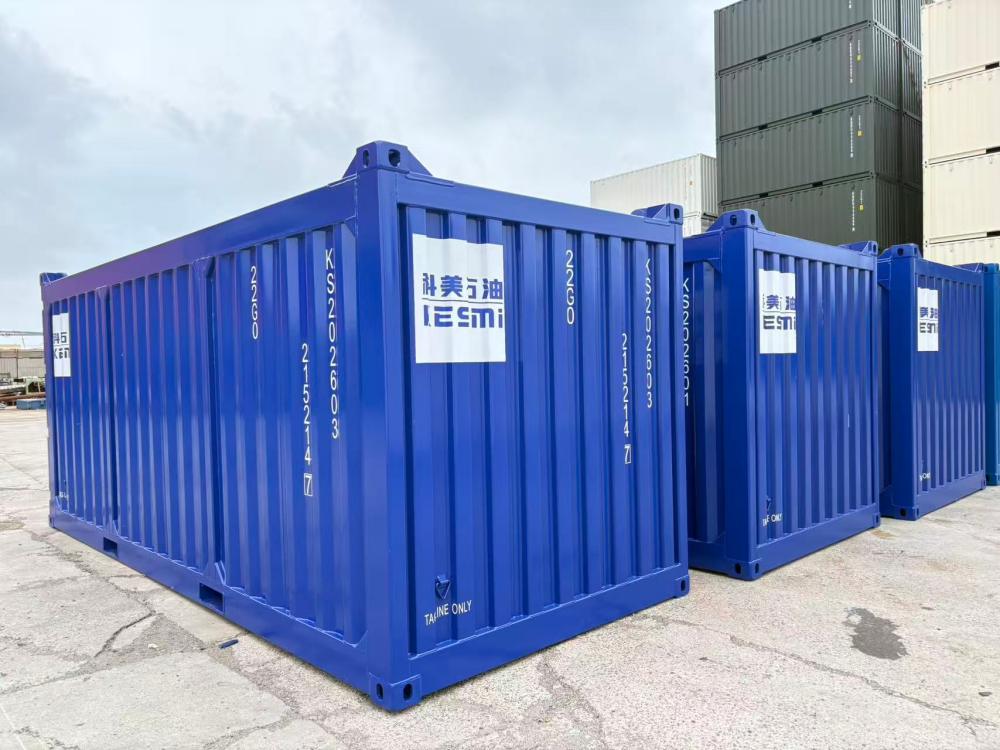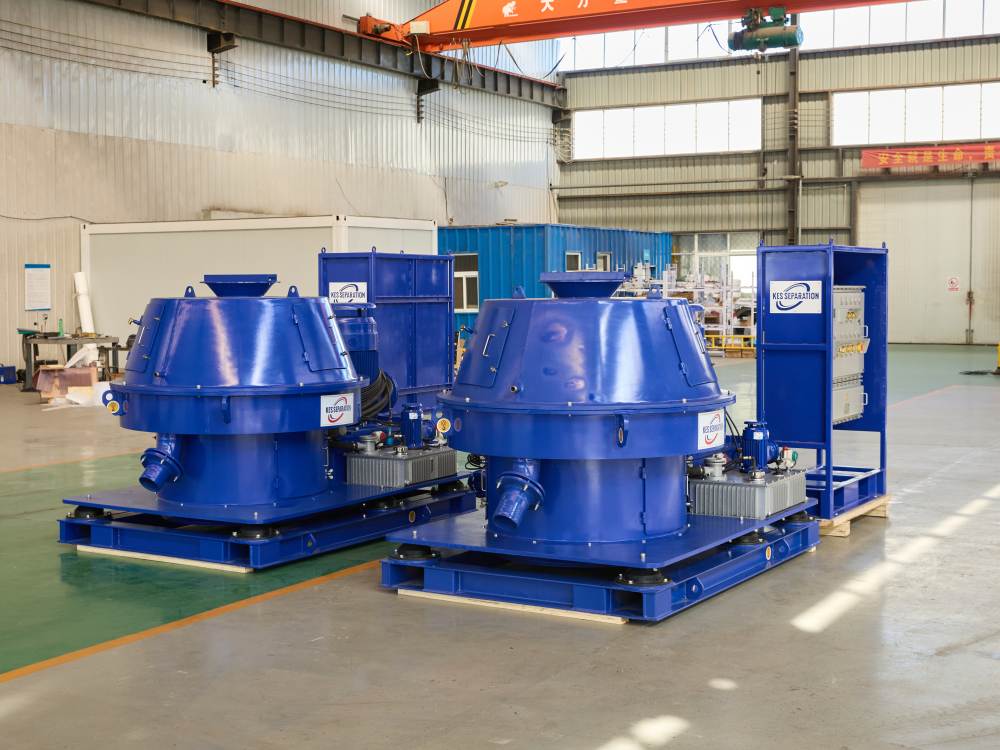
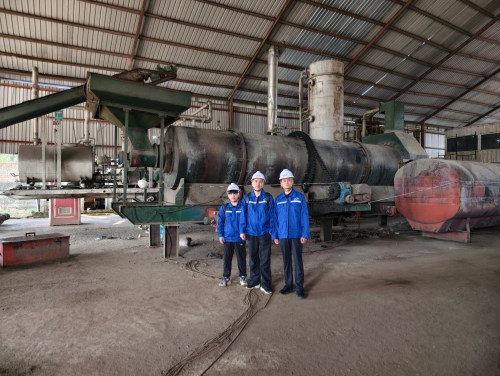
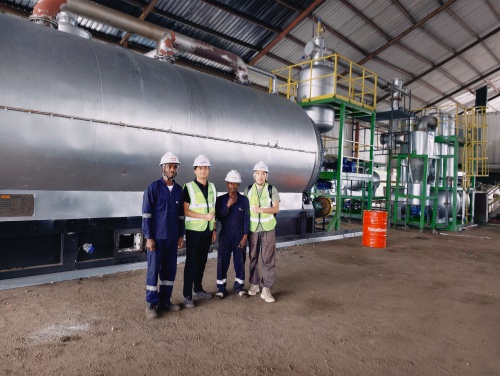
By the end of September 2026, KES Separation completed the installation and commissioning of a thermal desorption unit (TDU) in Abia State, Nigeria. Our client is a reputable Nigerian drilling waste management firm with over 20 years of industry experience. Over the years, the client has operated both continuous and batch-type TDUs from various manufacturers. Due to performance failures of their existing TDUs, the client placed an order for the new TDU in early 2026. We finished the replacement and commissioning test run of the newly installed TDU by September. The ordered TDU including Feed unit, Pyrolysis unit, condensation unit, waste gas treatment unit.
 |  |
Technical features of KES Separation TDU Feed unit
- The feed unit is equipped with big hopper to receive the drill cuttings.
- The feed unit is equipped with big ball valve to shut down during heating process
- The feed unit is equipped with rotation feeder to avoid screw conveyor blockage
- The feed unit is equipped with spring to minor adjustment of the height
- The feed unit is equipped with ladders and handrails for safety operation
Technical features of KES Separation TDU Pyrolysis unit
- Robust construction with premium high-temperature resistant materials (Q345R, SS321, SS316 optional)
- Skid-mounted furnace supplied; eliminates on-site brick furnace work and cuts installation time
- Reactor/furance lined with thermal insulation for energy saving
- Spiral screw flights fitted to transport dried solids to discharge
- Anti-coking structures including swing scrapers, chains and single meteor hammers
Technical features of KES Separation TDU condensation unit
- KESS offers tube-and-shell or pipe condensers per customer requirements.
- Tube-and-shell condensers: 2 or 4 sets, matched with standalone cooling water tank.
- Pipe condensers: serpentine pipes fully submerged inside the water tank.
- Oil tank mounted under condensation unit for temporary storage of condensed oil & water.
Technical features of KES Separation TDU waste gas treatment Unit
- Non-condensable gas (NCG) routed to furnace for combustion, lowering diesel consumption and fuel cost.
- Wet scrubber connected after furnace to purify flue gas.
- Treated flue gas exhausted through high-level chimney.
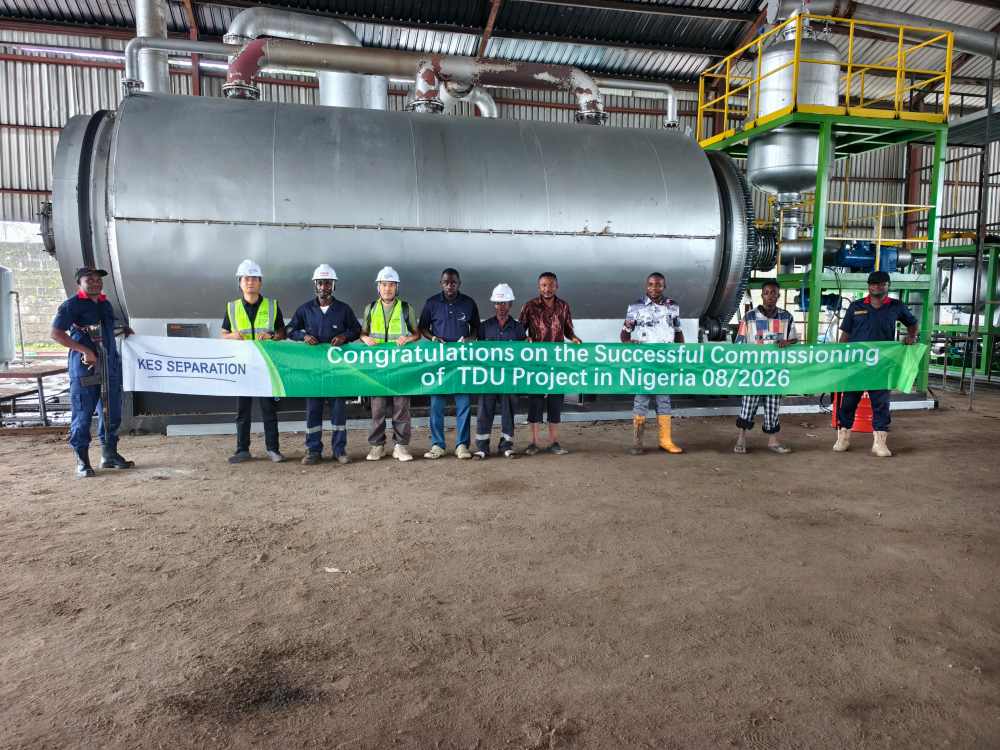
The customer is highly satisfied with our on-site technical support for TDU installation and commissioning. We carried out three test runs:
- Air pressure test for leakage inspection and repair
- Water test run to check main pipeline joints and burners
- Drill cuttings test run to validate dried cuttings output
Everyone on-site was excited as dried cuttings discharged from the reactor. Many thanks to all team members for every bit of support and collaboration.
Below is the full video documenting the installation, commissioning and test run completed by the KES Separation team in Abia, Nigeria.
KES Separation is the leading brand in solids control & drilling waste management equipment supplier. KESS can offer complete line of solids control equipment & drilling cuttings treatment equipment. Shaker and decanter centrifuges are the two key equipment in solids control system; while vertical cuttings dryer & Thermal Desorption Unit are the two key equipment in drilling waste management operations. The vertical cuttings dryer is designed for processing OBM cuttings to recover valuable oil-based mud for reuse. However, it cannot handle centrifuge discharge cuttings featuring high viscosity and ultra-fine solids. Unlike the vertical cuttings dryer, the Thermal Desorption Unit (TDU) can process various types of OBM cuttings, WBM cuttings, oil sludges, oil slops, oil-contaminated soil and more. In other words, the TDU can treat nearly all oil-bearing waste streams.
KES Separation offers multiple Thermal Desorption Unit models for diverse applications, including batch-type and continuous TDU systems. Batch TDU capacities range from 5 tons, 10 tons, 15 tons up to 20 tons per batch. Continuous TDU units deliver throughput of 1 to 5 tons per hour. TDUs can be engineered as skid-mounted, frame-mounted or trailer-mounted configurations.
Batch TDU from KES Separation
Sealed reactor/cavity. Load one batch of materials at one time → seal, heat up and hold for desorption → cool down, discharge residues → empty the chamber before the next batch.
Cycle sequence: feeding → heating → constant-temperature desorption → cooling → discharging. Operates in intermittent cycles.
| Model | Capacity | Fuel | Result |
| KSTDU-05T | 05 tons/batch | Diesel/LPG/CNG | TPH <1% |
| KSTDU-10T | 10 tons/batch | Diesel/LPG/CNG | TPH <1% |
| KSTDU-15T | 15 tons/batch | Diesel/LPG/CNG | TPH <1% |
| KSTDU-20T | 20 tons/batch | Diesel/LPG/CNG | TPH <1% |
Below is full video documenting the installation, commissioning and test run of Batch Type TDU in Africa.
Continuous TDU from KES Separation
Rotary kiln / twin-screw indirect heating reactor. Feed materials continuously from one end while discharging residues continuously from the other end. Materials move slowly inside the equipment, where water and hydrocarbons are desorbed during transportation. Feeding and discharging run non-stop under steady continuous operation.
| Model | Capacity | Fuel | Result |
| KSCTU-2T | 2 tons/hour | Diesel/LPG/CNG | TPH <1% |
| KSCTU-5T | 5 tons/hour | Diesel/LPG/CNG | TPH <1% |
Comparison table of key features between Batch TDU and Continuous TDU.
| Comparison Item | Batch TDU | Continuous TDU |
| Operation Mode | Intermittent cyclic batch operation; shutdown between batches for feeding/discharging and cooling | 24h steady feeding & discharging, non-stop (only shutdown for periodic maintenance) |
| Capacity | Fixed batch size; hourly output fluctuates greatly, subject to batch cycle | Stable hourly throughput; suitable for large-scale and stable feedstock supply |
| Temperature Control | Repeated heating and cooling cycle for each batch; high energy consumption for repeated heat-up | Maintains constant operating temperature continuously; lower energy consumption per unit material |
| Material Adaptability | Tolerant to fluctuating feed quantity, variable oil content and discontinuous supply. Flexible start-stop, ideal for small-batch test runs and mobile site solutions | Requires stable feedstock with minor composition variation; unstable feed flow will impair process stability |
| Footprint & Weight | Compact single reactor; easy skid mounting and mobility, suitable for offshore platforms & drilling sites | Longer overall unit, multiple auxiliary feed/discharge screws; heavier weight, higher complexity for offshore layout and CCS certification |
| Capital Cost | Lower initial equipment investment; fast site deployment for skid-mounted mobile units | High equipment cost, complicated auxiliary feeding, sealing and dedusting systems; large one-time project investment |
| Maintenance | Chamber accessible for inspection between batches; seals suffer thermal cycling and wear faster | Rotating parts (screws, kiln body) wear continuously under sustained high temperature; stringent sealing requirement to prevent oxygen ingress |
| Typical Application Scenarios | Mobile skid for drill cuttings treatment at drilling sites, intermittent operation, offshore mobile units, low throughput, pilot test | Onshore centralized treatment plant, large-volume oily sludge processing for long-term stable operation |
Recommendations to help you select between Batch TDU and Continuous TDU
- If your feedstock supply is intermittent or unstable Choose Batch TDU.
- If you require stable, long-term continuous processing with constant feed supply Choose Continuous TDU.
- For offshore platform or limited-space well site deployment Batch TDU is usually preferred.
- If your project is phased, with small to medium throughput and limited upfront budget Batch TDU is a better option.
- If you target a centralized onshore waste treatment plant with large daily capacity Continuous TDU brings better long-term economics.
There is no absolute “better” type. The final selection depends on your actual feed condition, site layout, operating mode, throughput requirement and budget. We are ready to tailor the solution according to your project data. Welcome to contact KES Separation for technical support in Thermal Desorption Unit.